
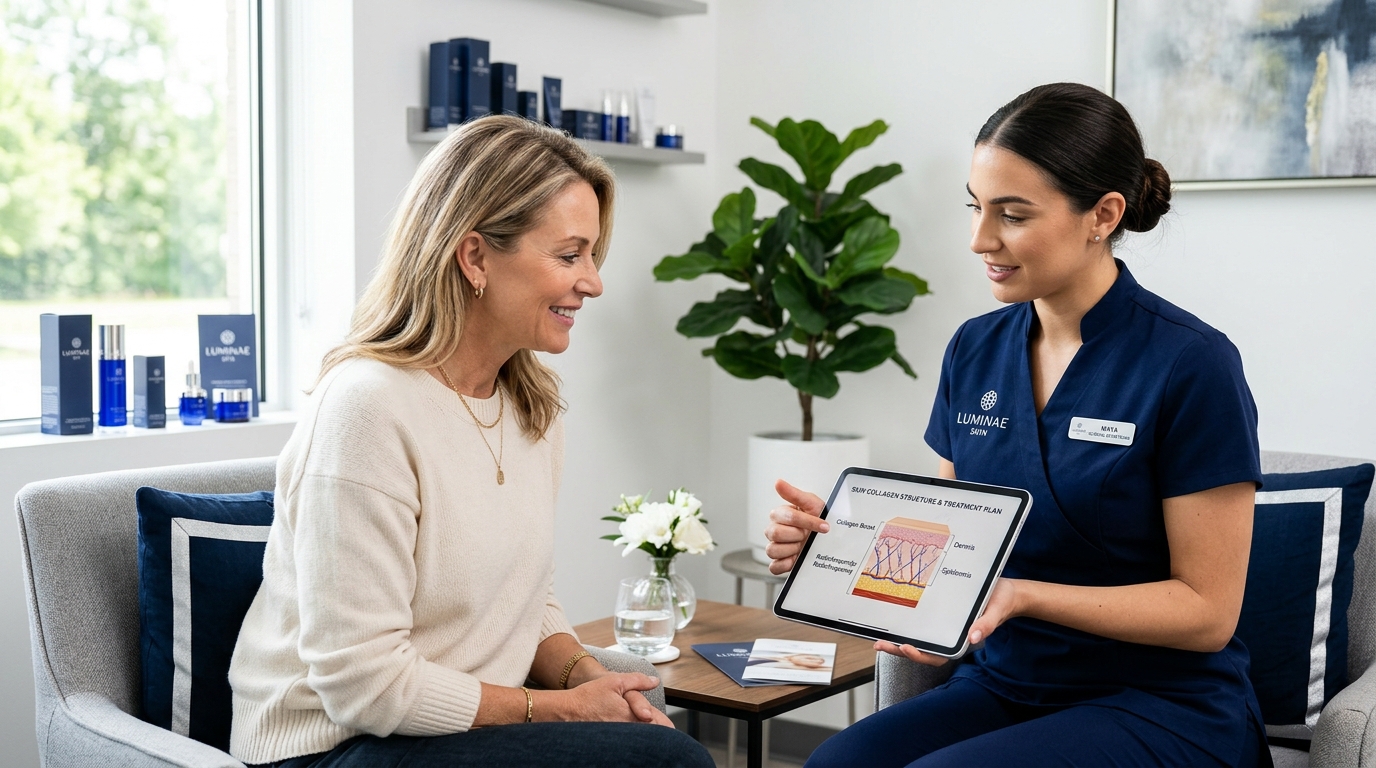
The Evolution of Skin Tightening in Winter Garden
Non-invasive skin tightening has quietly become the most requested aesthetic service among Winter Garden residents who want real, lasting results without the recovery time of surgery.
The 34787 zip code — home to the fast-growing Horizons West corridor — has seen a surge in demand for medspa services that fit an active, health-forward lifestyle. Residents here are not looking to pause their routines for weeks of surgical downtime. They want treatments that work around school pickups, weekend trail runs, and packed social calendars. And that shift in expectation has fundamentally changed what a modern skin clinic offers.
Traditional surgical lifts were once the only credible option for addressing sagging skin and lost definition. But surgery carries real tradeoffs: general anesthesia, visible scarring, extended recovery, and costs that stretch well into five figures. The new wave of technology-driven, non-invasive alternatives delivers measurable tissue remodeling without a single incision. In a clinical context, skin tightening refers to the stimulation of collagen and elastin fibers within the dermis, prompting the skin to firm and contract over time. And the need is real — research published by the National Institutes of Health confirms that loss of skin elasticity is observed in 99% of elderly individuals, making early intervention far more effective than reactive treatment.
Preventative aesthetics is the philosophy driving this change. Rather than waiting for significant laxity to develop, the active Horizons West demographic is investing in consistent, low-disruption maintenance — protecting what they have while encouraging the skin to keep building its own structural support. Understanding why that structural support matters starts with one thing: collagen.
Why Collagen Boosting is the Foundation of Skin Health
Collagen is the structural protein that holds your skin together, and once its production begins to decline, every other aspect of skin health follows.
Collagen as skin architecture. Think of collagen fibers as the scaffolding beneath the surface of your skin. In your twenties, that scaffolding is dense, resilient, and constantly being replenished. But starting around age 25, the body produces roughly 1% less collagen per year. By the time most people start searching for “skin tightening near me,” that cumulative loss has already translated into visible laxity, fine lines, and a loss of that firm, lifted appearance that once required no effort to maintain.
The skin microbiome connection. What makes this process more complex is that collagen loss does not happen in isolation. Scientists exploring how skin, mouth, and gut microbiomes change with aging have found that shifts in microbial balance directly impact skin resilience — meaning the biological environment your collagen lives in becomes less supportive over time. A disrupted microbiome can accelerate inflammation, slow cellular turnover, and compromise the skin barrier, all of which undermine collagen integrity.
Florida’s UV burden. For Winter Garden residents specifically, this natural aging curve is steepened by one unavoidable environmental factor: relentless sun exposure. Florida’s year-round UV intensity breaks down elastin and collagen fibers at an accelerated rate compared to cooler climates. Prolonged UV exposure triggers the overproduction of enzymes called matrix metalloproteinases, which actively degrade existing collagen. And unlike age-related decline, UV damage compounds daily without intervention.
Positioning collagen as the primary target of any effective skin health strategy is not a marketing convenience — it is a biological reality. The treatments that produce the most visible and lasting results are precisely those that stimulate the body’s own collagen synthesis from within. That deeper mechanism is exactly what the most advanced non-invasive technologies, including FDA Class II red light therapy, are designed to activate.
The Rise of FDA Class II Red Light Therapy
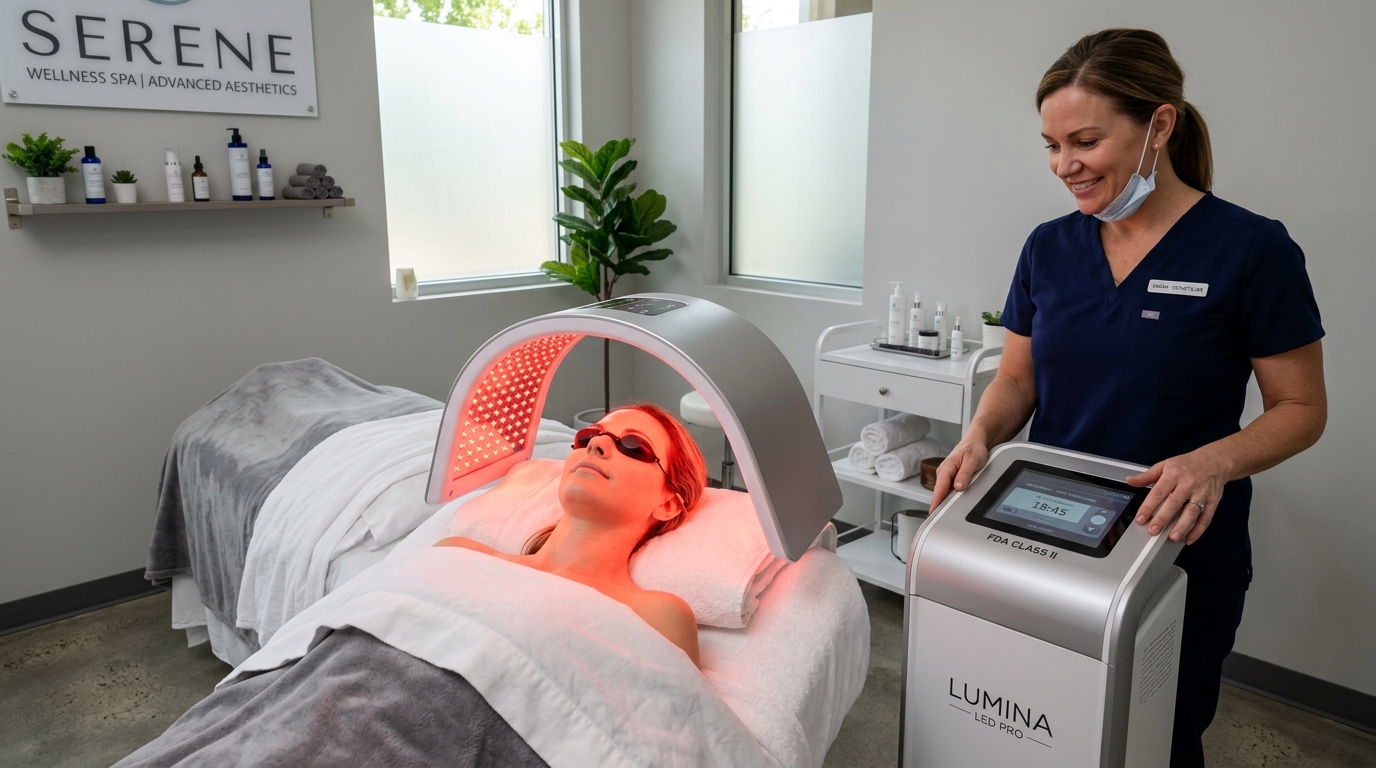
Not all red light devices are created equal — FDA Class II medical-grade equipment delivers measurable wavelength precision that consumer-grade masks simply cannot replicate.
Medical-grade classification matters more than most people realize. Consumer red light masks sold online operate at inconsistent output levels and lack the regulatory oversight that FDA Class II devices must meet. Class II devices are subject to performance standards that govern wavelength accuracy, irradiance, and safety protocols, which means the light reaching your skin is doing exactly what the research says it should.
The biological mechanism behind the results is called photobiomodulation. At the cellular level, specific wavelengths of red and near-infrared light penetrate the dermis and stimulate mitochondria — the energy-producing structures inside each cell. That stimulation triggers a cascade of repair activity, including increased ATP production and, critically, a measurable uptick in fibroblast activity. Fibroblasts are the cells responsible for synthesizing collagen, making red light therapy one of the most scientifically grounded collagen boosting treatments available today.
What distinguishes this modality from chemical peels or laser resurfacing is the recovery experience. There is no peeling, no redness that lingers for days, and no need to block off your calendar. A typical session fits into a lunch break. For athletes and active individuals, that zero-downtime profile extends beyond aesthetics — research published by the NIH has documented photobiomodulation’s role in reducing muscle fatigue and accelerating tissue recovery, making it genuinely dual-purpose.
The core benefits, in practice, include:
- Pain-free treatment — no heat damage, no anesthesia, no discomfort during or after the session
- No downtime — return to normal activity immediately, including workouts or outdoor sun exposure with standard SPF protection
- Safe for all skin types — unlike certain laser wavelengths, red light carries no risk of post-inflammatory hyperpigmentation across Fitzpatrick skin types
That combination of accessibility and clinical grounding is exactly why local providers are rethinking how they structure their offerings — and why comparing where and how you access these treatments matters just as much as the technology itself.
Comparing Local Options: Medspas vs. Traditional Dermatology
When residents search for a skin care clinic in Winter Garden 34787, they are navigating a landscape that has shifted dramatically — with medspas and technology-forward wellness centers now offering services that once lived exclusively inside dermatology offices.
Laser resurfacing momentum is one of the clearest signals of this shift. Laser skin resurfacing saw a 6% increase in procedural volume in 2024, according to the American Society of Plastic Surgeons — a meaningful climb that reflects growing consumer confidence in clinic-based aesthetic treatments. And that demand is landing squarely in medspa settings, where appointment availability and pricing tend to be more accessible than a traditional dermatology practice.
Membership-based wellness models are accelerating this migration further. Rather than paying per-visit fees that add up quickly, many Winter Garden residents are gravitating toward monthly membership structures that bundle treatments like non invasive skin tightening Winter Garden providers offer alongside facials, peels, and LED therapy. This approach lowers the barrier to consistent care — which, as the previous sections established, is precisely what collagen-rebuilding protocols require to deliver lasting results.
Transparent pricing is where the real differentiation emerges between provider types. Traditional dermatology offices often tie aesthetic services to insurance coding that obscures true out-of-pocket costs. Medspas and approachable aesthetics-focused clinics in the Winter Garden area tend to publish menu pricing directly, allowing you to plan a realistic treatment budget before you ever book a consultation. That clarity builds trust — and for 50+ clients making long-term investment decisions about their skin, trust is non-negotiable.
But professional treatments are only part of the picture. What you do between appointments shapes results just as powerfully as what happens inside the clinic.
Beyond the Clinic: The ‘Holy Grail’ of At-Home Maintenance
Professional treatments and at-home products are not competing strategies — they work as a system, and understanding that relationship is what separates consistent results from frustrating plateaus.
The community’s most-asked question tends to surface in local Facebook groups and neighborhood forums alike: what is the one face mask worth rebuying? For skin in the 50-plus range, especially in Florida’s humid-yet-air-conditioned climate, hydrating sheet masks and barrier-repair formulas tend to earn that repeat-purchase loyalty. Look for ingredients like hyaluronic acid, ceramides, and niacinamide — these reinforce the skin’s moisture barrier rather than stripping it, which matters when you are moving between outdoor heat and aggressively air-conditioned interiors all day.
Professional priming is what makes those at-home products genuinely perform. When a provider uses FDA Class II red light therapy for skin tightening, the cellular environment shifts — circulation improves, collagen synthesis accelerates, and the skin becomes more receptive to topical actives. In practice, a quality face oil or moisturizer applied after a professionally treated skin cycle tends to penetrate more effectively than the same product applied to untreated skin. As Dr. MacDonald Cosmetic Dermatology notes, success rates for top skin treatments depend heavily on consistent maintenance and professional guidance — a point that applies equally to the products you use between appointments.
The caveat worth stating plainly: no serum, oil, or mask replaces what clinical equipment delivers at the structural level. Over-relying on products without periodic professional intervention is a common pattern among people who plateau early. At-home care maintains and extends results; it does not create them independently. That distinction becomes especially relevant when exploring what non-invasive treatments can realistically accomplish on their own — which the next section addresses directly.
What You Need to Know: Skin Tightening Essentials
Non-invasive skin tightening has moved from a niche option to the standard of care for adults who want consistent, visible results without surgical downtime.
Here is a condensed look at what the previous sections have established — and what that means for your next step.
- Non-invasive treatments are now routine maintenance. The 2024 ASPS procedural statistics confirm that minimally invasive procedures have surged year over year, reflecting a broader cultural shift toward prevention over correction.
- FDA Class II Red Light Therapy does more than one job. It addresses collagen production, skin laxity, and muscle recovery in a single session — making it one of the most versatile tools available at any medspa Winter Garden FL residents can access locally.
- World-class technology is now local. Winter Garden’s growing corridor of medical-grade aesthetic clinics means you no longer need to commute to downtown Orlando to access equipment and protocols that were once exclusive to major metropolitan practices.
- Membership models beat one-time treatments. Consistency drives results, and a structured membership spreads the cost into a predictable monthly investment while keeping your treatment cadence on track.
The most effective skin care strategy combines professional-grade technology, evidence-backed protocols, and a commitment to showing up regularly — and Winter Garden now makes all three genuinely accessible.
With that foundation in place, the only remaining question is where to begin — and that is exactly what the next step addresses.
Starting Your Rejuvenation Journey in Winter Garden
The most important step toward firmer, healthier skin is also the simplest: a single consultation that maps your goals to treatments that actually deliver.
At a reputable Skin Care Clinic in Winter Garden 34787, that conversation shapes everything — which modalities fit your skin type, how often you should treat, and what realistic results look like over time. There is no guesswork, and there is no pressure to commit to a full protocol before you feel confident.
Local convenience is an underrated factor in treatment success. Clinics near Horizons West mean you are not driving across the metro for every maintenance session. Consistency drives results, and consistent appointments become far easier when the clinic fits naturally into your existing routine.
Transparent pricing and membership models remove the other common obstacle. When you know exactly what a session costs — and what a monthly membership unlocks — budgeting for your wellness becomes straightforward rather than stressful. That clarity tends to keep patients on schedule, which directly supports the collagen-building timelines that make non-invasive treatments effective.
And that is ultimately what non-invasive skin tightening offers: real, progressive results without surgery, downtime, or ambiguity. If tighter, more resilient skin is a priority for you this season, schedule a consultation and let a local expert build a plan around your life — not the other way around.