
Beyond the Romance: What a Couples Massage Actually Is
A couples massage is a genuine wellness strategy, not just a romantic gesture — and understanding that distinction changes everything about why it works.
So, what is couples massage, exactly? At its core, it’s a treatment where two people receive simultaneous massages in the same shared room. Two tables, two therapists, one carefully curated environment designed to lower the nervous system’s guard. And while the format is commonly associated with romantic partners, it’s equally popular among close friends, siblings, and parents and adult children looking to decompress together.
The real power here goes deeper than relaxation. The American Massage Therapy Association notes that couples massage provides a unique opportunity for co-regulation — a process where the nervous systems of both individuals begin to synchronize into a state of deep, shared calm. When two people unwind in proximity, the physiological effect compounds. Research published in PMC supports this, linking shared massage experiences to measurable improvements in overall wellbeing.
This synchronized relaxation also makes the couples format an ideal entry point for anyone new to spa treatments or medical aesthetics. There’s a natural comfort in not being alone — a familiar presence across the room lowers anxiety and encourages first-timers to fully surrender to the process. Whether you’re a longtime spa regular or exploring wellness treatments for the first time, the shared structure is designed to meet you where you are.
Before you book, though, it helps to understand exactly how these sessions are structured from start to finish.
The Logistics: What Usually Happens in a Couples Session
Knowing what to expect at a couples massage spa removes the guesswork — and that clarity alone helps you relax before you even lie down.
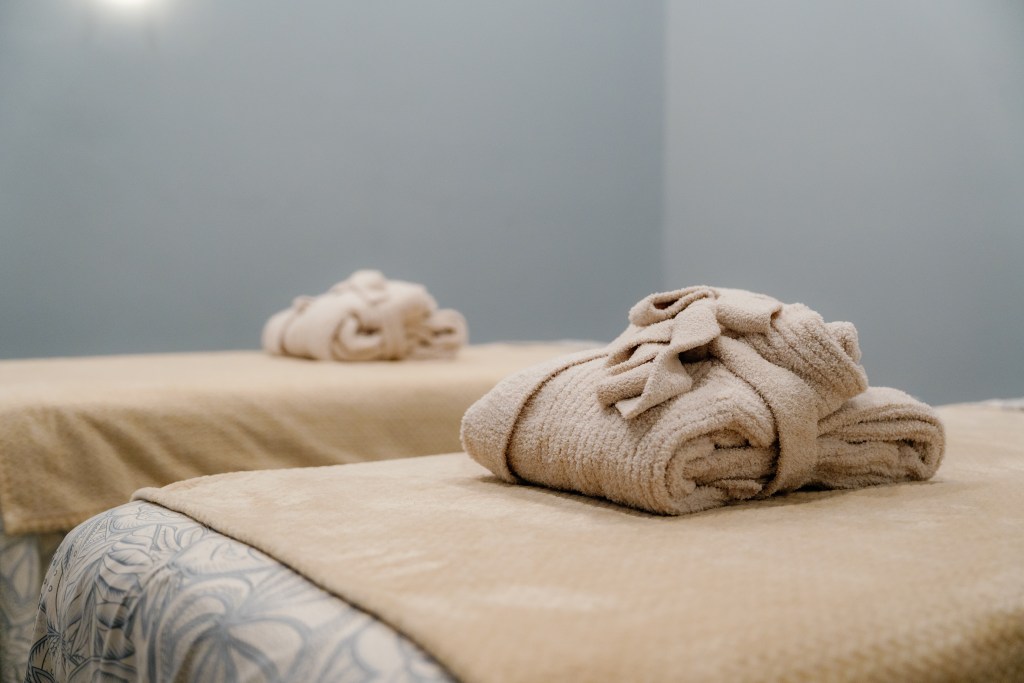
The setup is simpler than most people imagine. A typical couples suite houses two side-by-side massage tables, each attended by a separate therapist, all within a single private room designed to feel calm and cohesive. Ambient lighting, synchronized music, and a shared aesthetic make the space feel intentional rather than clinical.
Arrival and consultation. You’ll both check in together, but each person completes a brief intake process individually. Pressure preferences, areas to avoid, and any physical concerns are discussed privately with your assigned therapist — meaning one partner can request deep tissue while the other opts for a lighter Swedish touch. According to the International Spa Association, the presence of a partner actually reduces the “novelty stress” of a new spa environment, making it easier for first-time visitors to settle in.
Attire FAQ: What do you wear? Standard professional draping is used throughout — you’re covered by sheets at all times, with only the area being worked on exposed. Wear whatever undergarments you’re comfortable in, or nothing at all. Your therapist will never ask you to be less modest than you choose.
The session itself typically runs 50 to 80 minutes, followed by a quieter “glow period” — time set aside in a relaxation lounge or within the suite itself to rehydrate, decompress, and simply be present together. That unhurried post-treatment window matters more than most first-timers expect. If you’re curious about building this into a regular ritual, the shared decompression time is often where the real connection deepens — which sets up an important question about why that shared downtime carries such outsized relationship benefits.
Why Shared Relaxation is a Relationship Power Move
Booking a spa massage for couples isn’t just a nice treat — it’s one of the most biochemically effective ways to strengthen a relationship.
The science centers on oxytocin. Often called the “cuddle hormone,” oxytocin is released through touch, proximity, and shared positive experiences. When two people relax side by side during a couples massage, both partners trigger this neurochemical response simultaneously — amplifying the bonding effect beyond what either person experiences alone. At the same time, cortisol (the primary stress hormone) drops. Lower cortisol in both partners means less reactivity, less irritability, and fewer of the small friction points that quietly erode connection over time.
According to the Journal of Health Psychology, approximately 80% of couples report that engaging in shared relaxation activities improves their feelings of closeness and relationship satisfaction.
Parallel play matters for busy professionals. Psychologists use this term to describe the comfort of being present together without agenda or performance — something chronically overscheduled couples rarely get. A side-by-side therapeutic session creates exactly that: 60 minutes of shared stillness that doesn’t require conversation, planning, or output.
Building a shared wellness habit compounds over time. Isolated self-care treats symptoms; co-regulation treats the underlying dynamic. When both partners prioritize recovery together, wellness stops being something one person drags the other into — and starts becoming a genuine shared identity. That shift, as the next section explores, often begins with simply getting one person through the door for the first time.
The Gateway Effect: Overcoming Spa Intimidation
For many people — especially men and high-achieving professionals — understanding what is a couples massage is less of a wellness question and more of a permission slip. The familiar presence of a partner transforms an unfamiliar clinical environment into something approachable, even appealing.
The International Spa Association (ISPA) identifies couples massage as a key “gateway” experience for men and first-time spa-goers who would otherwise find a solo appointment too clinical or vulnerable-feeling. Arriving alongside someone they trust sidesteps the self-consciousness that keeps so many people from ever booking at all. In practice, what starts as a partner’s birthday treat frequently becomes the moment a skeptic realizes therapeutic bodywork belongs in their own routine — not just on special occasions.
Career pressure accelerates that shift. For professionals managing chronic stress, the transition from “one-off gift” to “routine maintenance” is often triggered by noticing how much better they function after a session. A professional clinic environment reinforces this — it reframes self-care as a performance strategy rather than indulgence, which resonates strongly with results-oriented personalities.
That’s precisely where a structured membership model makes the difference. Rather than re-deciding every few months, a consistent framework keeps the habit alive. If you’re curious how that kind of ongoing support is built, learn more about our approach — or, if you’re still in “first step” territory, gifting the experience through an eGift certificate is a low-pressure way to introduce a hesitant partner to the concept. The next step is making that session count — which starts with getting the details of the experience exactly right.

Maximizing Your Session: Customization and Packages
Knowing what a couples massage is only gets you halfway there — how you customize the experience determines whether it becomes a one-time treat or a genuine wellness ritual.
The modality you choose changes everything. Swedish massage prioritizes circulation and relaxation through long, flowing strokes, making it the ideal starting point for first-timers. Deep tissue targets chronic muscle tension with sustained pressure, while specialized medical aesthetics treatments address specific skin or structural concerns. Neither is universally “better” — they serve different goals.
A practical approach is to build around your core massage with complementary add-ons. Red light therapy enhances cellular recovery and reduces inflammation, making it a natural follow-up to bodywork. A customized facial layered into a couples day extends the relaxation window while addressing individual skincare needs. According to the AMTA 2023 Massage Profession Survey, 64% of people receiving regular massage therapy do so specifically for stress reduction and mental health — which means pairing modalities that compound those benefits isn’t indulgent, it’s strategic.
On pressure preferences: two people sharing a room rarely share the same tolerance. Before the session, each person communicates directly with their own therapist — medium pressure for one, firm for the other — so both experiences are fully personalized without compromise.
On the value side, a la carte bookings add up quickly. A membership model consistently delivers better ROI for couples who want regular sessions, locking in lower per-visit costs and building the kind of routine consistency where the real wellness benefits compound over time. That compounding effect is worth exploring further.
The Bottom Line: What You Need to Know
The real benefits of couples massage extend far beyond a relaxing afternoon — they represent a scientifically grounded, shared physiological reset that strengthens both body and relationship simultaneously.
- Couples massage synchronizes relaxation. Both partners enter a shared parasympathetic state, making the experience meaningfully different from two solo sessions happening side by side.
- It removes the barrier to spa entry. For anyone who finds solo wellness visits intimidating, arriving with a partner transforms an unfamiliar environment into a comfortable one — a point covered earlier in this article that deserves repeating here.
- Co-regulation delivers deeper stress relief. Research published in the Journal of Health Psychology confirms that shared wellness experiences trigger oxytocin release, reducing interpersonal conflict and fostering emotional bonding in ways a solo session simply cannot replicate.
- Routine maintenance compounds the results. A single session produces real benefits, but a consistent schedule — ideally supported by a membership model — is what converts a one-time treat into a sustained wellness practice.
The most effective path is repetition, not just intention. If you’re new to the experience, taking that first step together is easier than most people expect. The science is clear, the barrier is lower than it looks, and the compounding returns on a shared routine make this one of the most practical wellness investments a couple can make. What comes next is simply finding the right local home for that routine.
Starting Your Shared Wellness Journey in Winter Garden
Couples massage works best as a consistent practice — and where you go matters as much as how often you go. Proximity is the quiet force behind sustainable wellness habits. When your spa is a short drive away rather than a special-occasion destination, booking a session stops feeling like a luxury and starts feeling like a natural part of your routine. Research consistently shows that repeated therapeutic touch compounds its benefits over time, meaning the couples who see the deepest co-regulation results are the ones who come back regularly, not just on anniversaries.
J Sterling’s – Winter Garden was built specifically for that kind of lifestyle commitment. The Sterling Wellness Circle membership model makes high-end massage and advanced skincare accessible without the financial friction that derails most wellness intentions. For Winter Garden residents, that means no long commutes, no prohibitive price barriers, and no enrollment fees standing between you and your first session.
If you’ve been wondering what to expect during a couples massage or whether it’s worth the investment, the honest answer is: the experience consistently exceeds expectations — and the benefits multiply when you return. This isn’t a one-time indulgence to check off a list. It’s a shared, science-backed practice that strengthens connection, reduces stress, and resets both partners at the same time.
Your next step is simple: explore the Sterling Wellness Circle and discover how affordable luxury can become your new normal — together.