

Why Your Neck Tension Won’t Go Away on Its Own
That heavy, dragging feeling at the base of your skull by mid-afternoon isn’t just tiredness — it’s your body signaling a structural problem that rest alone won’t solve.
Tech neck is a modern epidemic, and many desk-bound professionals are living proof. Between long I-4 commutes spent hunching over a steering wheel and eight-hour stretches staring at monitors, the cervical spine absorbs punishment daily. The human head weighs roughly 10–12 pounds in a neutral position, but tilting it just 30 degrees forward — a typical phone or laptop angle — multiplies that load to nearly 40 pounds of pressure on the neck’s supporting muscles and vertebrae.
Chronic tension doesn’t reset overnight. When those cervical muscles remain under constant strain, they develop persistent tightness that compounds over weeks and months. What starts as stiffness quietly escalates into recurring tension headaches, reduced range of motion, and radiating shoulder pain. Waiting it out is, in practice, the slowest route to making things worse — not better.
That’s precisely why therapeutic massage for neck pain has shifted from spa indulgence to functional healthcare. As Dr. Brent Bauer of the Mayo Clinic notes, massage therapy can be a safe and effective way to manage neck pain, especially when it’s caused by muscle tension or stress. The real question isn’t whether massage helps — it’s which type targets your specific pattern of dysfunction. That’s where the right technique makes all the difference, and why understanding your options matters before booking your next session with a trained relief specialist.
The Best Types of Massage for Targeted Neck Relief
Not all massage is created equal — and when it comes to persistent neck pain, choosing the right modality can mean the difference between temporary relief and lasting change.
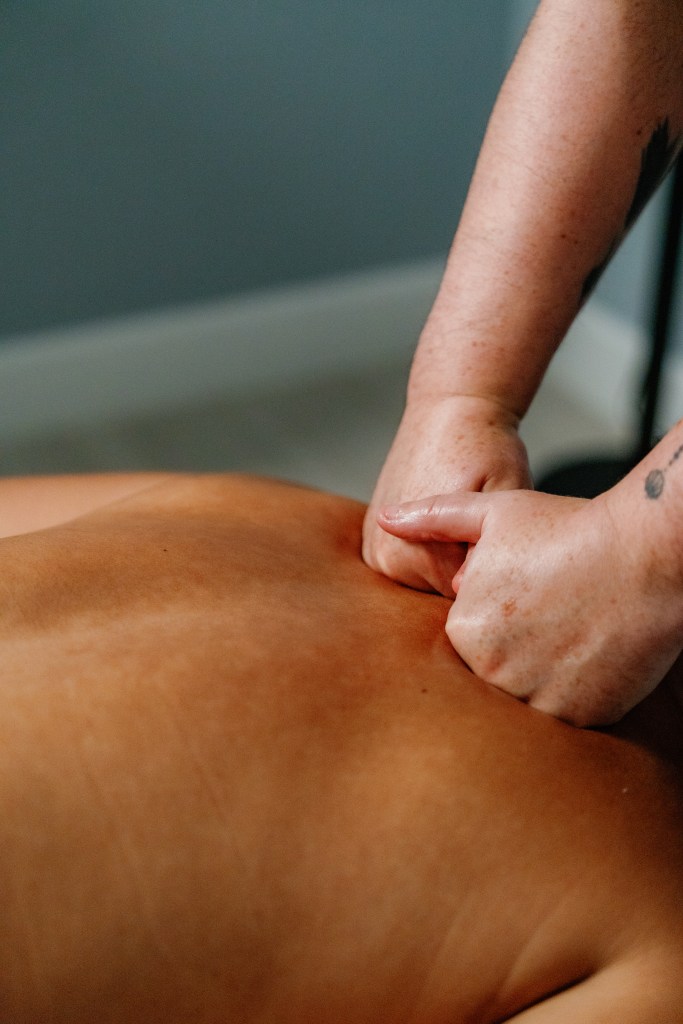
Deep tissue massage for neck pain is often the most effective starting point for chronic sufferers. Unlike a relaxation massage, deep tissue work applies sustained pressure to reach the sub-occipital muscles — the small, dense group of muscles at the base of your skull. These muscles are a primary driver of tension headaches, and standard surface-level massage rarely touches them. A skilled therapist can release adhesions in this layer that have built up over months of poor posture or stress.
Therapeutic massage takes a more clinically informed approach. According to research published in PubMed Central, medical massage has demonstrated effectiveness in reducing neck pain by increasing local blood circulation and accelerating the healing of strained cervical muscles — a finding supported by the American Massage Therapy Association. Better circulation means faster removal of the metabolic waste products that keep inflamed tissue locked in a pain cycle.
Trigger point therapy zeroes in on the hyperirritable “knots” embedded within muscle fibers. What many people dismiss as shoulder tightness is often referred pain radiating from trigger points in the levator scapulaecapulae or upper trapezius. Sustained, targeted pressure on these points can interrupt the pain-referral pattern and restore normal muscle function.
Complementing any of these modalities with red light therapy can further reduce inflammation at the tissue level, accelerating recovery between sessions. But relief from a single visit, however skilled, is only part of the equation — how often you receive treatment matters just as much as the type.
The Science of Frequency: Why One Massage Isn’t Enough
A single massage session can feel transformative — but the relief it delivers rarely lasts if you stop there. Does massage help neck pain long-term? The evidence says yes, but only when applied consistently and at the right dose.
Bold callout: Research published in the Annals of Family Medicine found that 60-minute therapeutic massage sessions administered 2–3 times per week produced significantly greater pain relief than shorter or less frequent sessions — making regularity the single most important variable.
The cumulative effect is what separates a temporary fix from lasting structural change. Each session builds on the last — gradually lengthening shortened muscle fibers, restoring range of motion, and retraining the nervous system to release chronic holding patterns. A one-and-done spa visit treats the symptom; a consistent schedule treats the cause.
Metabolic waste removal is a key part of why repetition matters. Muscle tension traps byproducts like lactic acid and inflammatory cytokines in the tissue. A single session begins clearing that buildup, but the body needs repeated circulatory stimulation — through massage — to fully flush and reset the affected area. Think of it less like a quick fix and more like a course of treatment.
Consistent access makes this kind of therapeutic frequency practical. A structured membership model removes the friction of scheduling and cost decisions each time, so sessions actually happen at the cadence your body requires. Knowing the right muscles to target during those sessions, however, is the next critical piece — which is exactly where anatomy comes in.
Where to Focus: Navigating the Anatomy of Neck Pain
Knowing where to apply pressure matters just as much as knowing how — and targeting the right muscles is what separates lasting relief from temporary comfort.
The two biggest offenders in neck pain are the levator scapulaecapulae and the trapezius. The levator scapulae runs along the side of the neck, connecting the cervical spine to the shoulder blade. When chronically tight — often from prolonged screen time or carrying tension in your shoulders — it pulls on the base of the skull and creates that deep, stubborn ache many people can’t shake. The trapezius spans the upper back and neck, and its upper fibers are notorious for developing trigger points that refer pain upward into the head and jaw.
So where should you massage to get rid of neck pain? For most non-specific stiffness, focusing on the back and sides of the neck — along with the upper trapezius at the shoulder junction — delivers the most relief. According to the American Massage Therapy Association, applying pressure to soft neck tissues facilitates removal of metabolic waste while delivering oxygen-rich blood to fatigued muscles. Choosing the best types of massage for neck pain means working these specific structures deliberately, not just broadly.
However, the front of the neck is an entirely different matter. The anterior neck houses the carotid arteries, jugular veins, and several delicate nerve clusters. Applying uncontrolled pressure here — even with good intentions — carries real risk. Medical sources flag that aggressive manipulation near the carotid artery has been linked, in rare cases, to arterial dissection and stroke. This is not an area for self-massage or untrained hands.
Safety First — key boundaries for neck massage:
- Avoid direct pressure on the front of the neck, particularly the sides of the throat where the carotid pulse is felt
- Stop immediately if you experience dizziness, tingling in the arms, sudden headache, or visual changes during any neck massage
- Do not massage over swollen lymph nodes, inflamed skin, or any area with a recent injury
- Consult a professional if your neck pain follows an accident, is accompanied by numbness, or has persisted beyond two to three weeks without improvement
- Self-massage tools like massage guns should be used only on the posterior and lateral neck muscles — never directed at the throat or spine directly
In practice, self-massage works well for mild tension in the trapezius and upper shoulders, but the levator scapulaecapulae and deeper cervical muscles often require a trained therapist’s hands to address properly. If your pain has a structural component or isn’t responding to consistent soft-tissue work, that raises a fair question — is massage enough, or do you need something more targeted? The answer depends on what’s actually driving your symptoms, which is exactly where understanding the role of physical therapy becomes essential.

Massage vs. Physical Therapy: Which Do You Need?
Choosing between massage and physical therapy isn’t about picking a winner — it’s about understanding what each modality actually fixes and when to use them together.
Massage is the primary tool for soft tissue tension, stress-driven muscle guarding, and conditions like massage therapy for tension headaches — situations where the problem lives in the muscles themselves rather than in joint mechanics or nerve pathways. When your neck feels perpetually locked, heavy, or sore without a clear structural cause, that’s a soft tissue problem, and massage addresses it directly by increasing circulation, releasing trigger points, and down-regulating the nervous system’s threat response.
Physical therapy, on the other hand, targets structural rehabilitation — correcting movement patterns after injury, rebuilding strength post-surgery, or retraining cervical stability when vertebral alignment is compromised. A physical therapist prescribes exercises and mobilizations designed to create lasting mechanical change. However, even the most carefully designed PT program can plateau when chronically tight muscles prevent joints from moving freely. This is where massage becomes the missing link: regular soft tissue work keeps muscles supple enough to respond to the corrective exercises PT demands, amplifying the results of both approaches.
According to the Clinical Journal of Pain, participants receiving regular massage reported a 50% reduction in pain intensity scores after just four weeks — a result that underscores its value as a frontline intervention, not merely a complement. For non-specific stiffness with no diagnosed structural damage, therapeutic massage is frequently the most efficient first step, resolving the issue before it escalates into something requiring more intensive rehabilitation. Understanding exactly when and how to apply each approach brings us to the broader clinical picture — which is worth examining closely.
The Bottom Line: What You Need to Know
Massage is not a luxury for neck pain sufferers — it’s a clinically validated treatment with a clear, evidence-based protocol that outperforms passive rest and over-the-counter pain management alone.
Massage works, but only when it’s done consistently and correctly. Research published in the Annals of Family Medicine found that patients receiving hour-long treatments multiple times per week were five times more likely to show a clinically significant improvement in function. That’s not an incremental gain — that’s a category difference in outcomes.
Here’s what the evidence consistently points to:
- Consistency is the active ingredient. Two to four sessions per month is the threshold where cumulative therapeutic benefit builds, leading to roughly a 50% reduction in pain scores for chronic sufferers.
- Technique matters as much as frequency. Deep tissue and therapeutic approaches — not light relaxation strokes — are what actually release fascial adhesions and deactivate trigger points in chronically tight cervical muscles.
- Anatomy demands professional expertise. The neck houses the carotid artery, vertebral arteries, and delicate nerve roots. Pressure applied without anatomical knowledge carries real risk, which is why professional guidance isn’t optional — it’s foundational.
- Massage addresses root causes. Unlike pain medication, targeted cervical massage interrupts the tension-headache cycle by resolving the muscular dysfunction generating it, not masking the signal.
The gap between temporary relief and lasting resolution comes down to one decision: treating massage as a scscheduled, purposeful intervention rather than an occasional indulgence. Fortunately, making that clinical dose of care both accessible and affordable is exactly where local, membership-based wellness centers in Winter Garden can change the equation entirely.
Starting Your Wellness Journey in Winter Garden
Lasting relief from neck pain isn’t a distant goal — it’s available right now, locally, at J Sterling’s – Winter Garden.
The clinical dose of massage that research supports — consistent sessions over four to six weeks — becomes genuinely affordable through a membership model. Rather than paying full price for each visit and skipping months in between, members lock in a lower per-session rate that makes the frequency your muscles actually need sustainable on a real budget. That’s the difference between one-off relief and lasting structural change.
Beyond massage, J Sterling’s offers a full menu of complementary services that pair naturally with your treatment plan. A customized facial addresses the tension-driven skin stress that chronic neck pain often accelerates, while Red Light Therapy supports tissue recovery between sessions by reducing localized inflammation at a cellular level. These aren’t add-ons for indulgence — they’re tools that extend the work your massage therapist starts.
As J Sterling’s puts it: “Your Wellness Journey Starts Here.” That framing matters. Neck pain rarely resolves in a single appointment, and it rarely travels alone — stress, posture, sleep, and skin health are all connected. A spa environment built around that whole-person perspective gives you more than a treatment; it gives you a plan.
The clearest next step is simple: book a consultation at J Sterling’s – Winter Garden and let a licensed therapist assess your specific pattern of tension, recommend a session frequency, and design a care plan around your life. Relief is closer than you think.