
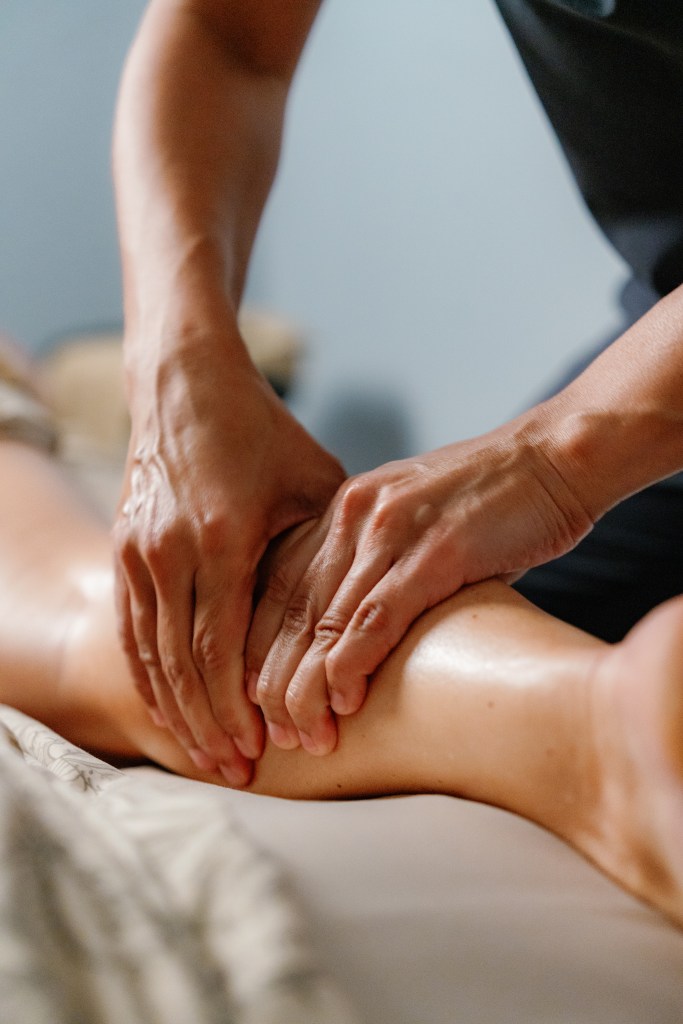

The Science of Healing: How Massage Repairs Strained Tissue
Massage for muscle soreness isn’t just about feeling better — it’s a precise biological intervention that changes how damaged tissue rebuilds itself at the cellular level.
When muscle fibers tear, the body floods the area with cytokines — signaling proteins that coordinate the inflammatory response. Inflammation is necessary for healing, but too much of it stalls recovery and extends pain. Research published in Science Translational Medicine found that massage may help modulate cytokine production, essentially moderating the inflammatory cascade without switching it off entirely.
This is the critical distinction: massage doesn’t eliminate inflammation — it calibrates it.
That calibration matters more than most people realize. Unlike over-the-counter anti-inflammatory medications, which broadly suppress the immune response, mechanical pressure from massage appears to act as a biological sensor for muscle cells. It signals that repair work should accelerate, not that the problem has been chemically masked. According to a study, this mechanical stimulus also promotes mitochondrial biogenesis — the process by which cells generate new energy-producing units essential for tissue reconstruction. Healthy mitochondria mean faster, stronger repair.
In practice, this makes professionally applied therapeutic bodywork a fundamentally different tool than a pain reliever. Medication quiets symptoms; targeted massage actively participates in the repair sequence. Understanding that difference sets the stage for the most important question — because applying that pressure at the wrong moment can do more harm than good.
The Danger Zone: Why Immediate Massage Can Be Harmful
Reaching for massage the moment a muscle injury strikes is one of the most common — and potentially damaging — mistakes in muscle strain recovery.
The acute phase, roughly the first 24 to 48 hours after injury, is when your body is at its most vulnerable. During this window, damaged capillaries and muscle fibers are actively bleeding into surrounding tissue. The body responds by triggering an inflammatory cascade — redness, swelling, heat, and pain — that, while uncomfortable, is purposeful. This initial response lays the groundwork for tissue repair.
Deep pressure disrupts this process in two critical ways. First, it can rupture the fragile clots forming at the injury site, increasing internal bleeding and expanding the bruised area. Second, it can mechanically disrupt the protective fibrin matrix your body builds around the tear — essentially dismantling the scaffold before construction has even begun. According to a source, applying deep tissue techniques too early to a Grade II or III strain can exacerbate tissue tearing and increase localized swelling.
When you’re tempted to massage sore muscles immediately after a pull or tear, these warning signs suggest you should wait instead:
- Visible bruising or significant swelling forming within hours of the injury
- Sharp, localized pain that worsens with light touch — not just general achiness
- Loss of strength or range of motion, which may indicate a Grade II or III structural tear
The key distinction is between general post-workout soreness and an actual structural strain — and knowing which you’re dealing with determines everything about when hands-on therapy is safe to begin. That timing question is exactly what the next section addresses.
Timing Your Recovery: When to Book Your Session
Knowing when to schedule a sore muscles massage is just as important as the massage itself — get it wrong by even 24 hours, and you risk making a strain significantly worse.
The 48-hour rule is your baseline: most acute muscle strains reach peak inflammation within the first 48 hours. During this window, the body is actively containing damage and beginning the clotting cascade that holds torn fibers together. Introducing manual pressure too early can disrupt that process, as the previous section outlined. Waiting until inflammation stabilizes is not overly cautious — it’s physiologically necessary.
Transitioning from RICE to manual therapy marks the shift from the acute phase into the sub-acute phase, typically around days 3–5 for mild-to-moderate strains. Once swelling begins to recede and passive range of motion returns without sharp pain, the tissue is ready to respond to therapeutic touch. This is also when post-injury massage begins to earn its reputation: improving circulation, reducing scar tissue formation, and restoring pliability to healing fibers.
The remodeling phase — roughly weeks 2 through 6 — is where massage delivers its most measurable benefit. Research published in a study confirms that massage is effective in reducing soreness intensity and improving muscle performance after exercise-induced damage. During remodeling, collagen fibers are being laid down and organized; targeted manual therapy helps orient those fibers along lines of tension rather than in the disorganized patterns that create chronic stiffness.
DOMS vs. structural strain is a distinction that changes everything. Delayed onset muscle soreness — the familiar ache that peaks 24–48 hours after a hard workout — involves micro-inflammation but no significant structural tearing. A true strain involves partial or complete fiber disruption. DOMS typically responds well to massage within 24 hours; a structural strain demands patience. Misreading soreness as mere DOMS is one of the most common reasons people seek massage too early and prolong their recovery.
Once you understand where you fall on that timeline, the next logical question becomes: what else can you do alongside massage to accelerate repair? The answer involves circulation, oxygen delivery, and some newer recovery tools worth knowing about.
The Fastest Way to Heal a Muscle Strain
Healing a muscle strain faster comes down to one core principle: keep the tissue supplied with what it needs to rebuild — oxygen, nutrients, and clear drainage of waste.
Rest alone is not a recovery strategy. Once the acute inflammatory window has passed (typically 48–72 hours post-injury), passive rest should give way to active recovery. Gentle movement, targeted massage, and complementary therapies work together to prevent stiffness and maintain the circulation your healing tissue depends on.
Circulation is the engine of repair. According to the a source, deep tissue techniques may increase local blood flow, accelerating the delivery of oxygen and nutrients to damaged fibers while flushing metabolic waste — including the byproducts that drive soreness and fatigue. This is also why early-stage massage timing can affect muscle spasms when timing is off: restricted circulation prolongs the spasm cycle rather than breaking it.
Oxygen and nutrients are the literal fuel for tissue repair. Collagen synthesis, cellular regeneration, and inflammation resolution all require a consistent supply of both. Anything that enhances microcirculation — whether massage, movement, or light-based therapy — directly shortens recovery time.
Red light therapy is one non-invasive tool worth adding to your recovery plan. By delivering targeted wavelengths into muscle tissue, it supports cellular energy production at the mitochondrial level. Think of it as a way to keep your cells working efficiently between massage sessions. Learn more about how this treatment works and whether it’s right for your recovery.
As healing progresses, the next challenge often isn’t the original tear — it’s the protective muscle guarding that develops around it.

Managing Muscle Spasms and Chronic Tightness
Muscle spasms after a strain aren’t random — they’re your nervous system pulling the emergency brake, and breaking that cycle is where targeted massage earns its keep.
A strain triggers an involuntary protective response: surrounding muscles contract to immobilize the injured area. That guarding is useful for about 48 hours. After that, sustained contraction cuts off circulation, starves the tissue of oxygen, and generates more pain — which triggers more spasm. The cycle feeds itself until something interrupts it.
Targeted pressure interrupts the pain-spasm-pain cycle by signaling the nervous system to release that grip. When applied at the right depth and timing, massage calms overactive motor neurons and restores blood flow to tissue that’s been effectively strangled. So if you’re wondering will massage help sore muscles locked in protective spasm — yes, but only once acute inflammation has settled and a qualified therapist has assessed what’s actually happening beneath the surface.
That assessment piece matters more than most people realize. A knot and a partial tear can feel nearly identical to an untrained hand, but treating a tear with aggressive deep pressure is exactly the wrong move. Professional evaluation separates chronic tightness — which responds well to sustained work — from acute structural damage that needs time first.
Consistency is what prevents the real long-term problem: restrictive scar tissue. According to the a source, improved circulation is essential during the remodeling phase of healing, ensuring scar tissue lays down in organized, flexible patterns rather than rigid, adhesive ones. Miss that window with irregular treatment, and tight, restricted muscle tissue can limit your range of motion long after the original strain is gone.
Bottom line: spasms are a signal, not a sentence — but they require a strategic, timed response, not just pressure applied and hoped for. The broader picture of what that strategy looks like — and what the research ultimately confirms — is worth a closer look.
The Bottom Line: What You Need to Know
Timing your massage correctly is one of the fastest ways to heal a muscle strain — and the difference between good and poor timing can mean weeks of added recovery.
Here’s what the evidence consistently points to:
- Wait at least 48 hours after a sharp acute injury before pursuing deep tissue work. Massage applied too early can worsen micro-tears and prolong inflammation rather than reduce it. Practitioners on forums like r/MassageTherapists consistently flag this as the most common mistake people make.
- Inflammation drops significantly with correctly timed massage. Research shows mechanical stimulation reduces inflammatory markers by roughly 30% — a meaningful edge over passive rest alone.
- Massage activates mitochondrial repair. By stimulating the expression of PGC-1alpha, massage helps muscle cells recover more efficiently from structural damage, according to the Buck Institute for Research on Aging — a process rest simply cannot replicate on its own.
- Scar tissue is preventable. A skilled massage therapist can identify adhesion patterns early and use targeted techniques to prevent them from hardening into permanent restrictions.
Bold truth: massage isn’t a shortcut — it’s a precision tool that works only when applied at the right phase of healing.
Whether you’re recovering from a hamstring pull or a chronic upper-back strain, the principles covered throughout this article apply across injury types. If you’re unsure where you are in your recovery timeline — or whether your injury is even ready for hands-on work — a professional assessment is your smartest next move, which is exactly what the next section addresses.
Starting Your Recovery Journey in Winter Garden
Getting professional guidance before self-treating a muscle strain is one of the smartest decisions you can make for your long-term recovery. Every strain is different, and what works for one person can set another back by weeks. Consulting a licensed massage therapist who understands injury staging — not just general soreness — ensures your treatment aligns with where your body actually is in the healing process.
At J Sterling’s in Winter Garden, the focus goes beyond a single session. The Sterling wellness circle membership is designed for exactly the kind of consistent, phased care that muscle strain recovery demands — regular appointments that adapt as your tissue moves from acute inflammation through remodeling and full restoration. In practice, that continuity is what separates people who bounce back strong from those who re-injure the same area months later.
The spa also offers red light therapy and customized facials as part of a genuinely whole-body approach to wellness, addressing both structural recovery and the systemic stress that injury places on the body. As J Sterling’s puts it, “your wellness journey starts here” — and that’s more than a tagline. It’s an invitation to stop guessing and start healing with intention.
If you’re a Winter Garden resident ready to move past the pain, book a personalized assessment at J Sterling’s and let an experienced therapist map out the right recovery plan for you.