
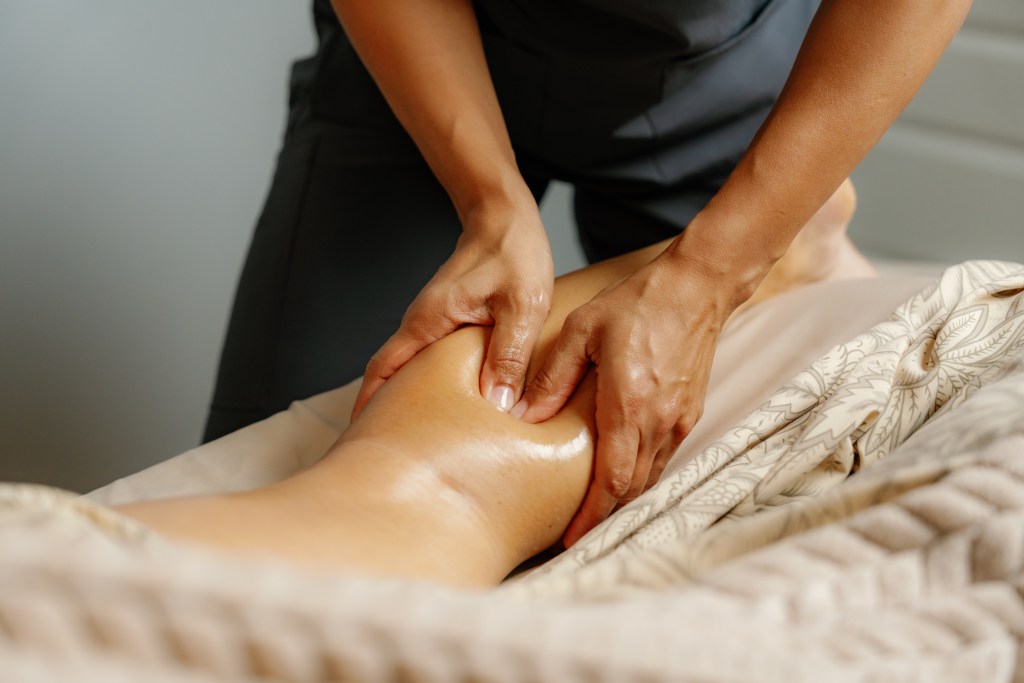

Why Tendons Struggle to Heal on Their Own
Most people dealing with persistent tendon pain aren’t suffering from simple inflammation — they’re stuck in a degenerative cycle that rest alone can’t fix.
Acute tendinitis involves genuine inflammation and typically resolves within a few weeks. Chronic tendinosis, however, is a different animal entirely: the tendon tissue has actually begun to degenerate, with disorganized collagen replacing healthy fibers. Rest doesn’t rebuild collagen. That’s why months of “taking it easy” can still leave you exactly where you started.
The blood supply problem makes everything worse. Unlike muscle tissue, tendons receive significantly less oxygen and nutrient-rich blood flow — which means that when damage occurs, the repair process is painfully slow. Without adequate circulation to the injury site, healing stalls.
Then there’s the mechanical problem — a constant tug-of-war between tight, overworked muscles and the already-stressed tendon they attach to. Every time that muscle contracts or stays shortened, it pulls directly on the damaged tendon, preventing tissue repair and perpetuating pain. As Northwestern Health Sciences University notes, “massage therapy can be a powerful tool for tendinitis by reducing the muscle tension that pulls on the tendon, thereby addressing the root cause of the strain.”
This is precisely why so many people ask will massage help tendinitis — and why the answer goes deeper than simple pain relief. Techniques like deep tissue massage target the tight muscles upstream of the tendon, reducing that constant mechanical strain before it reaches the injury site. Understanding how that works at a tissue level is where the real science gets interesting.
The Science of Breaking Down Adhesions and Scar Tissue
Massage for tendinitis works because it targets the structural damage inside the tendon itself — not just the surface-level soreness surrounding it.
Key Term — Adhesions: Adhesions are bands of fibrous scar tissue that form between tendon fibers after repeated micro-tearing. In the elbow, shoulder, or heel, they act like internal knots, restricting the tendon’s natural glide and progressively narrowing your range of motion. The more restricted the movement, the more compensatory strain gets loaded onto neighboring tissue — deepening the injury cycle described in the previous section.
According to the American Massage Therapy Association, deep tissue massage helps break down these adhesions and physically realigns collagen fibers that have been laid down in disorganized patterns during incomplete healing. That realignment is what makes the difference between tissue that functions and tissue that just fills a gap.
Here’s what that structural shift actually looks like:
| Before Massage | After Massage |
|---|---|
| Collagen fibers cross-linked randomly | Fibers realigned along lines of tension |
| Adhesions restrict tendon glide | Scar tissue softened and mobilized |
| Circulation impaired in damaged zone | Local blood flow increased |
| Pain signals amplified by restricted movement | Reduced mechanical irritation |
Cross-fiber friction takes this a step further. Applied perpendicular to the tendon’s length, friction massage creates controlled microtrauma that essentially “restarts” the healing process — prompting the body to lay down organized collagen rather than haphazard scar tissue.
This is therapeutic work, not relaxation. A session targeting tendon adhesions is intentional, sometimes uncomfortable, and clinically focused. Understanding that distinction helps set realistic expectations — and points directly toward why an active treatment approach consistently outperforms simply waiting it out.
Why Manual Therapy Outperforms Rest Alone
Active treatment consistently beats passive waiting when it comes to tendon recovery — and the research backs this up decisively.
The “wait and see” approach is tempting. Rest, avoid the activity, take some ibuprofen. But as the previous sections established, a degenerated tendon isn’t inflamed — it’s structurally disorganized. Rest doesn’t realign collagen fibers or break down adhesions. What it often does is allow the cycle of dysfunction to continue undisturbed.
Tendonitis massage works through a mechanism rest simply cannot replicate: vasodilation. Tendons, particularly their central “white zone,” receive almost no direct blood supply. Targeted manual pressure forces surrounding tissues to dilate, temporarily flooding the tendon’s environment with the oxygen and nutrients that promote cellular repair. According to research on Achilles tendinopathy, pressure massage significantly improves local circulation in areas that are otherwise chronically under-nourished. The results speak for themselves — a study published in the Journal of Orthopaedic & Sports Physical Therapy found that manual therapy combined with exercise produced a 23% greater improvement in pain scores than exercise alone in patients with Achilles tendinitis.
That synergy matters. Massage prepares the tissue; exercise then loads it progressively to stimulate proper collagen production. One without the other delivers incomplete results.
This combination proves especially effective across specific problem areas:
- Achilles tendinitis — Pressure massage along the tendon’s mid-portion reduces stiffness and improves the tissue’s response to eccentric loading exercises.
- Tennis elbow — Shoulder tendinitis research confirms that cross-fiber friction applied to the lateral epicondyle disrupts adhesions and restores normal tissue glide.
- Shoulder tendons — Releasing the surrounding rotator cuff musculature through targeted soft tissue work reduces the load placed on the tendon during movement, easing both pain and dysfunction.
Knowing what therapy can accomplish is only half the picture, though. Understanding what to actively avoid is just as critical — and some common instincts around tendinitis can actually set recovery back significantly.
What You Should Never Do With Tendonitis
Most tendinitis recovery mistakes fall into two categories: doing too much or doing too little — and both keep you stuck in the same painful cycle.
| Stop Doing This | Start Doing This Instead |
|---|---|
| Pushing through the pain during activity | Load the tendon gradually within a pain-free range |
| Complete rest and immobilization | Gentle, controlled movement to maintain tissue mobility |
| Pressing directly on the most painful spot without proper technique | Work the surrounding tissue and approach the area with trained guidance |
| Ignoring the muscle belly connected to the tendon | Address the full muscle-tendon unit, not just the hot spot |
Pushing through the pain is one of the most damaging things you can do — repeated loading on an already-compromised tendon causes micro-tears that compound the original injury. On the other end of the spectrum, complete immobilization creates its own problems. Without movement, tissue stiffens and new adhesions can form, making the path back to function even longer.
The muscle belly issue deserves particular attention. As Northwestern Health Sciences University notes, treating the muscle connected to the tendon reduces the constant tug-of-war that prevents healing. When self-treatment ignores this, it misses the root source of tension entirely. Targeted deep tissue massage for tendinitis addresses both the muscle belly and the tendon together — something untrained self-massage rarely achieves.
These mistakes explain why so many people plateau in recovery. The next step is knowing what does work — starting with some surprisingly effective at-home relief strategies to bridge the gap between professional sessions.

The Ice Massage Technique for Immediate Relief
Ice massage is one of the most underrated at-home tools for tendinitis — combining cold therapy with mechanical stimulation to quiet pain between professional sessions.
If you’re still asking will a massage help tendinitis, the answer expands when you add cryotherapy into the equation. The UnityPoint Health ice massage method is straightforward: freeze water in a small paper cup, peel back the top inch, and use the exposed ice to massage directly over the inflamed tendon in slow, overlapping circles.
The critical window is 5 to 10 minutes. Go shorter and you won’t achieve meaningful tissue cooling; go longer and you risk skin or nerve irritation. Within that window, ice triggers vasoconstriction — narrowing local blood vessels to reduce swelling — while the circular movement adds just enough mechanical pressure to keep the tissue from stiffening. It’s a dual mechanism that rest alone simply can’t replicate.
As the Mayo Clinic notes, boosting local blood circulation delivers the oxygen and nutrients tendons need to repair. Ice massage achieves this through a rebound effect: after vasoconstriction ends, blood rushes back into the area with renewed force, flooding the tendon with healing resources.
Pro Tip: Always keep a thin cloth between the ice and bare skin for the first 60 seconds until the area is numb enough to tolerate direct contact safely.
Think of ice massage as a bridge — a way to manage flare-ups and maintain tissue mobility between targeted manual therapy sessions with a professional. It addresses symptoms effectively at home, but it doesn’t replace the deeper structural work needed to break the cycle for good — which brings us to the bigger picture of what a complete recovery strategy actually looks like.
The Bottom Line: What You Need to Know
Massage isn’t passive recovery — it’s a clinical intervention that actively breaks the tendinitis cycle when applied correctly and consistently.
Massage as a clinical tool. Restrictive scar tissue is one of the primary reasons tendinitis becomes chronic. As noted by Pacific College of Health and Science, targeted massage techniques mechanically break down that disorganized collagen, restoring the tendon’s ability to move and load without pain. This isn’t a comfort measure — it’s structural rehabilitation.
Consistency drives results. Because tendons have a naturally limited blood supply, healing is slow without intervention. According to the Mayo Clinic, massage stimulates vasodilation, pushing circulation into tissue that rarely gets enough on its own. One session won’t fix a chronic tendon — regular treatment is what shifts the trajectory. A professional session targeting deep tissue keeps that circulatory pressure consistent enough to matter.
Technique specificity matters. For chronic cases, deep tissue and cross-fiber friction techniques outperform general relaxation massage. These methods reach the adhesions other approaches miss. For lighter maintenance between appointments, a combination approach can help sustain tissue mobility without overloading a healing tendon.
- Massage breaks down restrictive scar tissue that keeps tendons painful and immobile — it’s a clinical tool, not just comfort care.
- Tendons heal slowly due to limited blood supply; regular massage stimulates vasodilation to accelerate natural repair.
- Deep tissue and friction techniques are the most effective approaches for chronic tendinitis cases.
- Total rest is counterproductive — professional manual therapy keeps tissue mobile and prevents further adhesion buildup.
- Consistency is the non-negotiable factor; sporadic treatment rarely moves the needle on long-standing tendon damage.
Where you seek that consistent care matters just as much as the techniques used — which is exactly what the next step in your recovery comes down to.
Starting Your Recovery Journey in Winter Garden
Consistent, targeted treatment is the single biggest predictor of tendon recovery — and that’s exactly what a structured local wellness plan delivers. If tendinitis has kept you sidelined, J Sterling’s in Winter Garden offers a focused starting point: a targeted assessment that identifies which tissues are involved, how chronic the dysfunction is, and which massage techniques will drive the most progress for your specific situation.
Consistency is where most self-directed recovery plans fall apart. The Sterling Wellness Circle membership is built to solve that problem directly, giving members regular access to therapeutic sessions at a pace that actually supports collagen remodeling and tissue repair — not just occasional pain relief.
Beyond massage, J Sterling’s also offers FDA Class II certified Red Light Therapy, a complementary modality that works at the cellular level to reduce inflammation and accelerate healing between manual therapy sessions. Pairing Red Light Therapy with hands-on treatment addresses tendinitis from two angles simultaneously — mechanical and biological — which is a meaningful advantage when dealing with stubborn, slow-healing tissue.
Tendonitis rarely resolves on its own. But with the right combination of skilled hands, therapeutic technology, and a consistent treatment schedule, recovery is absolutely achievable. If you’re ready to stop managing pain and start reversing it, book a therapeutic massage session at J Sterling’s Winter Garden today.
Book your session now — your tendons won’t heal by waiting.