

That sharp ache when you lift a coffee mug. The weak, unreliable grip that makes opening a jar frustrating. The dull discomfort along the outside of your elbow that seems to return no matter how much you rest. Tennis elbow is one of those conditions that rarely stops your daily routine completely, but slowly affects the activities you rely on every day.
So, will massage help tennis elbow? In many cases, yes — but the outcome depends heavily on technique, timing, pressure, and whether the treatment approach matches what is actually causing your symptoms.
Below, you will find a detailed breakdown of how massage affects this injury, which techniques are commonly used, how to approach self-massage safely, and when it is time to stop experimenting at home and seek professional guidance.

What Tennis Elbow Actually Does to Your Forearm Tissue
Tennis elbow, medically known as lateral epicondylitis or lateral elbow tendinopathy, is often misunderstood as simply an elbow problem. The actual issue involves the extensor tendons and forearm muscles that attach near the lateral epicondyle — the bony prominence located on the outside of the elbow.
Repeated gripping, lifting, typing, racquet sports, and rotational movements can place continuous stress on these tissues. Over time, the tendon may develop small areas of degeneration and poor remodeling, creating a cycle where the tissue struggles to recover properly.
That is why focusing only on the elbow itself often misses the bigger picture. The muscles controlling wrist and hand movement create constant tension through their attachment point, and addressing those surrounding tissues is where massage therapy can become a valuable part of a broader recovery strategy.
Why Your Forearm Muscles Are the Real Culprits
Overuse commonly affects the wrist extensor muscles and the supinator, both of which connect around the lateral elbow region. When these muscles remain tight and restricted for long periods, they increase the mechanical load placed on the irritated tendon attachment.
This constant tension can contribute to discomfort during everyday movements such as gripping objects, lifting, typing, or turning the wrist. Restrictions in the surrounding fascia — the connective tissue that surrounds muscles — may further limit mobility and create additional stiffness throughout the forearm.
Massage does not directly “repair” a damaged tendon by itself, but reducing excessive muscle tension around the area may decrease stress on the irritated tissues and improve comfort during movement.
For people experiencing broader muscle-related discomfort, approaches such as massage therapy for muscle pain can also help address tension patterns that contribute to recurring discomfort.
The Difference Between Tendon Pain and Muscle Tension
Understanding the difference between tendon irritation and muscle tension is essential for safe treatment.
The lateral epicondyle — where the tendon connects near the elbow — can become highly sensitive during flare-ups. Applying aggressive pressure directly over this area may increase irritation instead of helping.
The forearm muscle belly, however, provides a safer and more responsive area for massage techniques. The thicker tissue running between the wrist and elbow is where many practitioners focus their work because it allows the therapist to address tension without repeatedly aggravating the most sensitive attachment point.
Knowing which tissue to target is what separates helpful soft-tissue work from a session that leaves the area more irritated.
Will Massage Help Tennis Elbow? Evidence and Practical Guidance
Massage can play a useful role in managing tennis elbow symptoms, but understanding its purpose is important. Massage is not a standalone cure for tendon problems. Instead, it works by addressing some of the factors that contribute to discomfort — especially excessive muscle tension, restricted soft tissue movement, and sensitivity around the affected area.
Mechanical pressure applied to the forearm muscles may improve circulation, reduce resting muscle tension, and temporarily decrease pain sensitivity. When the wrist extensor muscles become less restricted, they may place less constant stress on the irritated tendon attachment, allowing movement to become more comfortable.
The strongest results typically come when massage is combined with other evidence-based approaches, such as progressive strengthening exercises, mobility work, and activity adjustments. Massage supports the recovery process, but rebuilding tendon capacity remains an important part of long-term improvement.
Some smaller studies have reported improvements in pain levels and wrist movement following myofascial techniques applied to lateral elbow conditions, although the overall evidence remains limited and more high-quality research is needed. What current evidence suggests is that reducing surrounding tissue restriction may improve function when combined with an appropriate rehabilitation plan.
What the Evidence Actually Says
The research around massage for tennis elbow requires a balanced interpretation.
Deep transverse friction massage and similar tendon-focused techniques have been studied for lateral elbow pain, but evidence supporting them as a standalone treatment remains uncertain. Some reviews have found limited long-term benefits when these techniques are used alone, while other research suggests that manual therapy combined with exercise may provide short-term improvements in pain and function.
This distinction matters because tennis elbow is not simply a tight muscle problem. The tendon itself needs appropriate loading and gradual adaptation over time. Massage can help create a better environment for movement, but it should be viewed as one part of a complete recovery strategy.
For individuals dealing with persistent forearm tension, combining targeted massage with approaches such as deep tissue massage in Winter Garden may help address the surrounding muscular restrictions contributing to discomfort.
The Techniques That Specifically Target Lateral Epicondylitis
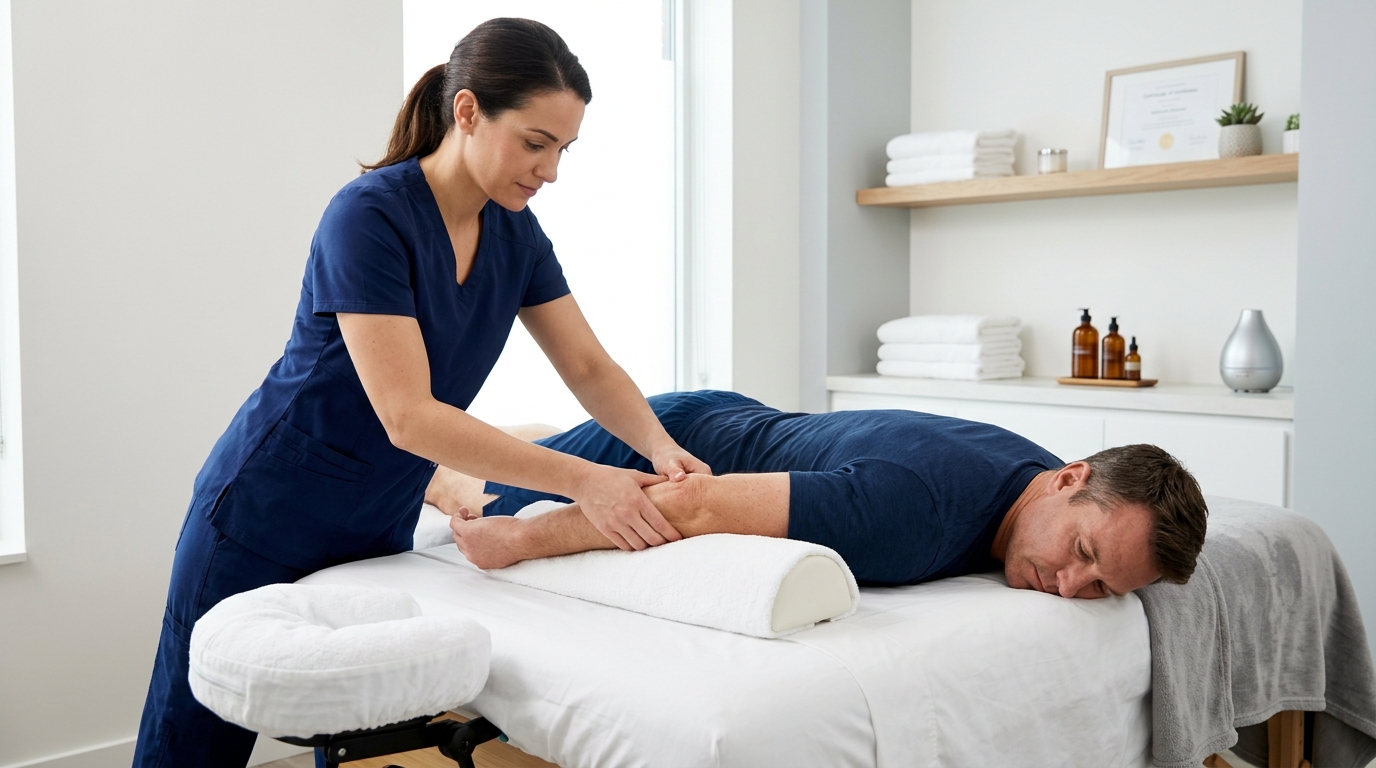
Although massage should not be viewed as a replacement for rehabilitation, certain techniques are commonly used to address the muscular tension patterns associated with lateral epicondylitis.
Each technique serves a different purpose. Understanding the difference helps prevent one of the biggest mistakes people make with tennis elbow: applying aggressive pressure directly to the painful area without understanding what tissue actually needs attention.
Cross-Friction Massage: Working Directly on the Tendon Attachment
Cross-friction massage for lateral epicondylitis is traditionally performed perpendicular to the tendon fibers near the lateral epicondyle, using controlled movements across the tissue rather than along its length.
The theory behind this approach is that mechanical stimulation may influence tissue remodeling and mobility. However, clinical evidence remains mixed regarding whether friction massage alone creates significant long-term tendon changes.
Because the tendon attachment can be highly reactive, aggressive pressure directly over the most painful point is generally not recommended. Many practitioners instead focus on surrounding tissues and use careful pressure based on the person’s tolerance.
After tendon-focused manual techniques, some individuals may benefit from supportive measures such as gentle movement or cold therapy, depending on the stage and sensitivity of the condition.
Myofascial Release and Trigger Point Work Along the Forearm
Myofascial techniques focus on the muscles and connective tissues surrounding the elbow rather than repeatedly compressing the irritated tendon attachment.
During self-massage or professional treatment, the focus is commonly placed along the wrist extensors, moving from the wrist toward the elbow while avoiding excessive pressure directly on the painful bony area.
Trigger point therapy for tennis elbow targets specific areas of increased muscle sensitivity, particularly within muscles such as the extensor digitorum and supinator. Sustained pressure applied carefully to these regions may help reduce muscular guarding and improve comfort during movement.
For guests looking for a more targeted approach, trigger point massage in Winter Garden can address specific areas of muscular restriction that may contribute to recurring tension patterns.
Sports Massage as the Integrative Framework
Sports massage for tennis elbow combines multiple techniques into a broader treatment strategy focused on movement, recovery, and muscle balance.
A session may include warming strokes, compression techniques, stretching, and targeted soft-tissue work throughout the forearm and surrounding areas. Rather than focusing only on the painful point, a skilled therapist considers how the entire arm functions together.
The lower arm, wrist, shoulder, and even upper back can influence how stress is distributed through the elbow. Addressing these connected areas may help reduce repeated strain patterns that contribute to ongoing symptoms.
A Practical Self-Massage Routine You Can Do at Home
Before starting any self-massage routine for tennis elbow, it is important to understand one principle: the goal is to reduce unnecessary tension, not to aggressively attack the painful area.
The right pressure should feel productive, not damaging. A useful guideline is working around a 4 to 6 out of 10 discomfort level — enough to feel resistance in the tissue, but never sharp, stabbing, or overwhelming.
A complete session usually takes around 5 to 10 minutes. During an active flare-up, daily gentle work may be appropriate for some people, while general maintenance may require less frequency. Doing more is not always better; irritated tissue needs time to adapt.
The Setup: Position, Warm-Up, and Pressure Rules
Start by placing your forearm comfortably on a table or your opposite thigh, with your palm facing downward and the arm relaxed.
Before applying focused pressure, warm up the surrounding tissue with gentle movements. A simple technique is wrapping your opposite hand around the forearm and slowly rotating through the soft tissue from the wrist toward the elbow. This prepares the muscles and reduces the temptation to begin with excessive pressure.
As you work, pay attention to how your body responds. A sensation of tension releasing is expected. Sharp pain, increasing discomfort, or a feeling that the area is becoming more irritated is a sign to reduce intensity or stop.
The objective is to improve movement quality and decrease muscular restriction — not to force the tissue into submission.
Will Massage Help Tennis Elbow? Self-Massage Steps
- Begin with longitudinal strokes through the forearm muscles.
Use your opposite thumb or fingers to apply slow pressure along the wrist extensor muscles, moving from the wrist toward the elbow. Spend extra time on areas that feel tight or dense, but avoid pressing aggressively directly on the most sensitive point of the elbow. - Target areas of muscular tension.
Locate specific tight areas within the forearm muscle belly and apply steady, comfortable pressure. Hold for several seconds while allowing the tissue to relax. The sensation should gradually decrease rather than intensify. - Finish with gentle mobility work.
After massage, move the wrist slowly through comfortable ranges of motion. This helps reinforce improved mobility and encourages the muscles to work through a more relaxed pattern.
How Long Before You Notice a Difference
Many people notice reduced forearm tightness immediately after massage because the muscles temporarily relax and the nervous system decreases its protective tension response.
However, tendon-related improvements usually take longer. Better grip comfort, improved wrist movement, and increased tolerance to daily activities often require several weeks of consistent care combined with appropriate strengthening and activity modification.
If your symptoms remain unchanged or become worse after consistent self-massage, that is an important signal that the approach may not be addressing the actual cause of your pain.
Persistent symptoms may require a professional evaluation to determine whether the issue involves tendon irritation, nerve sensitivity, movement patterns, or another underlying factor.
Warning Signs That Massage Is Making Your Elbow Worse
Knowing when to stop is just as important as knowing what technique to use.
Massage can support recovery when applied correctly, but certain symptoms indicate that continuing the same approach may delay healing or aggravate the condition.
Absolute Contraindications: When to Skip Massage Entirely
Avoid self-massage and seek professional guidance if you experience symptoms such as numbness, tingling, or unexplained weakness in the hand or forearm.
These signs may indicate nerve involvement, such as radial nerve irritation, which requires a different approach than simple muscle tension.
Massage should also be avoided or modified if you have:
- Recent trauma to the elbow
- Significant swelling or bruising
- Suspected tendon rupture
- Active infection or broken skin
- Conditions affecting blood clotting
In these situations, applying pressure without proper assessment may increase irritation instead of supporting recovery.
During-Session and Post-Session Red Flags
Some mild soreness after massage can be normal, especially when working with tight muscles that have not received attention for a long period.
However, the response after treatment matters.
Stop and reassess if:
- Pain becomes sharper during the technique
- Symptoms continue increasing after the session
- Your normal baseline discomfort is significantly worse the next day
- New numbness, tingling, or weakness appears
A helpful session should leave the area feeling more mobile and relaxed. If every session creates a larger flare-up, the technique, pressure level, or diagnosis may need to be reconsidered.

Why a Professional Therapeutic Massage Session Gets Faster Results
Self-massage can be a valuable tool for managing the muscular tension associated with tennis elbow, especially when combined with proper exercise, movement adjustments, and patience. However, there is a clear limitation: when you treat yourself, you are working without the ability to accurately assess tissue quality, compensate for protective movement patterns, or adjust technique instantly based on how your body responds.
A trained therapist brings something that a self-massage routine cannot replicate: real-time assessment and adaptation.
Instead of following a fixed sequence, a professional can evaluate where tension is actually coming from, determine which tissues are contributing most to your symptoms, and modify pressure and technique throughout the session.
For some clients, the primary issue is restricted forearm muscle tissue creating excessive pull on the tendon. For others, the problem may involve shoulder mechanics, posture, repetitive movement patterns, or compensation from another area of the upper body.
That distinction matters because tennis elbow is rarely just an isolated elbow problem.
What a Trained Therapist Assesses That You Can’t from the Outside
A skilled therapist evaluates the entire movement pattern connected to your symptoms.
During an assessment, they may look at:
- Which forearm muscles show the greatest restriction
- Whether the wrist extensors or supinator are contributing most to tension
- How shoulder and upper-arm mechanics influence forearm loading
- Whether your pain pattern suggests muscular tension or possible nerve involvement
- How your tissues respond to different levels of pressure and movement
They can also apply techniques that are difficult to perform on yourself, such as assisted stretching, pin-and-stretch methods, and targeted soft-tissue work while monitoring your response.
This level of precision is especially valuable when symptoms have lasted for months, returned repeatedly, or failed to improve with basic self-care.
The J Sterling’s Approach to Targeted Recovery Massage
At J Sterling’s in Winter Garden, therapeutic massage sessions are designed around each client’s specific concerns rather than following a generic routine.
Whether you are experiencing forearm tightness, elbow discomfort, shoulder tension, or repetitive strain from work, sports, or daily activities, the treatment approach focuses on identifying the areas contributing to your discomfort and creating a session adapted to your needs.
The goal is not simply temporary relaxation. It is providing targeted support that helps improve comfort, mobility, and your ability to return to normal activities with less restriction.
A professional session offers something that home tools and self-massage cannot provide: experienced hands that can adjust, respond, and work with your body instead of applying the same method every time.
The Bottom Line on Massage and Tennis Elbow Recovery
So, will massage help tennis elbow?
The most accurate answer is yes — but as part of a broader recovery strategy, not as a standalone solution.
Massage can help reduce excessive tension in the forearm muscles, improve comfort during movement, and decrease some of the mechanical stress placed on irritated tissues. Techniques such as myofascial release, trigger point work, and targeted soft-tissue therapy may support recovery when applied appropriately.
However, massage does not automatically repair every tendon problem. Tennis elbow recovery usually depends on multiple factors, including gradual strengthening, activity modification, movement correction, and allowing the tissue enough time to adapt.
The most important factor is matching the technique to the actual problem.
Aggressive pressure on an irritated tendon will not necessarily create faster healing. More intensity does not always mean better results. The right approach is controlled, consistent, and adapted to your current stage of recovery.
Start by paying attention to how your symptoms respond. If gentle massage reduces stiffness and improves movement, it can be a useful part of your routine. If pain continues to increase, symptoms spread, or weakness and nerve-related signs appear, professional assessment should come before continuing treatment.
For those looking to accelerate recovery, a therapeutic massage session focused specifically on your injury pattern can provide a more precise approach than trial-and-error self-treatment.
Massage works best when it is used intelligently: as a tool that supports the body’s recovery process while addressing the factors that keep tennis elbow returning.
A consistent plan that combines professional guidance, appropriate soft-tissue work, and strengthening exercises offers the best opportunity for restoring confidence, comfort, and grip strength over time.